The Road to Retraining Thoroughbreds: Slowing Down in a World That Rushes
I’ll be the first to admit it—my approach to starting and retraining horses might seem a bit old-fashioned. I’m methodical, deliberate, and some might even say slow. But after years of working with young horses and those facing challenges, I’ve learned that taking the long road often leads to the best outcomes. Not necessarily perfect outcomes, but sustainable ones. And in today’s horse world, sustainability is a conversation we need to have more often.
Right now, we live in a culture that rewards speed.
I’ll be the first to admit it—my approach to starting and retraining horses might seem a bit old-fashioned. I’m methodical, deliberate, and some might even say slow. But after years of working with young horses and those facing challenges, I’ve learned that taking the long road often leads to the best outcomes. Not necessarily perfect outcomes, but sustainable ones. And in today’s horse world, sustainability is a conversation we need to have more often.
Right now, we live in a culture that rewards speed.
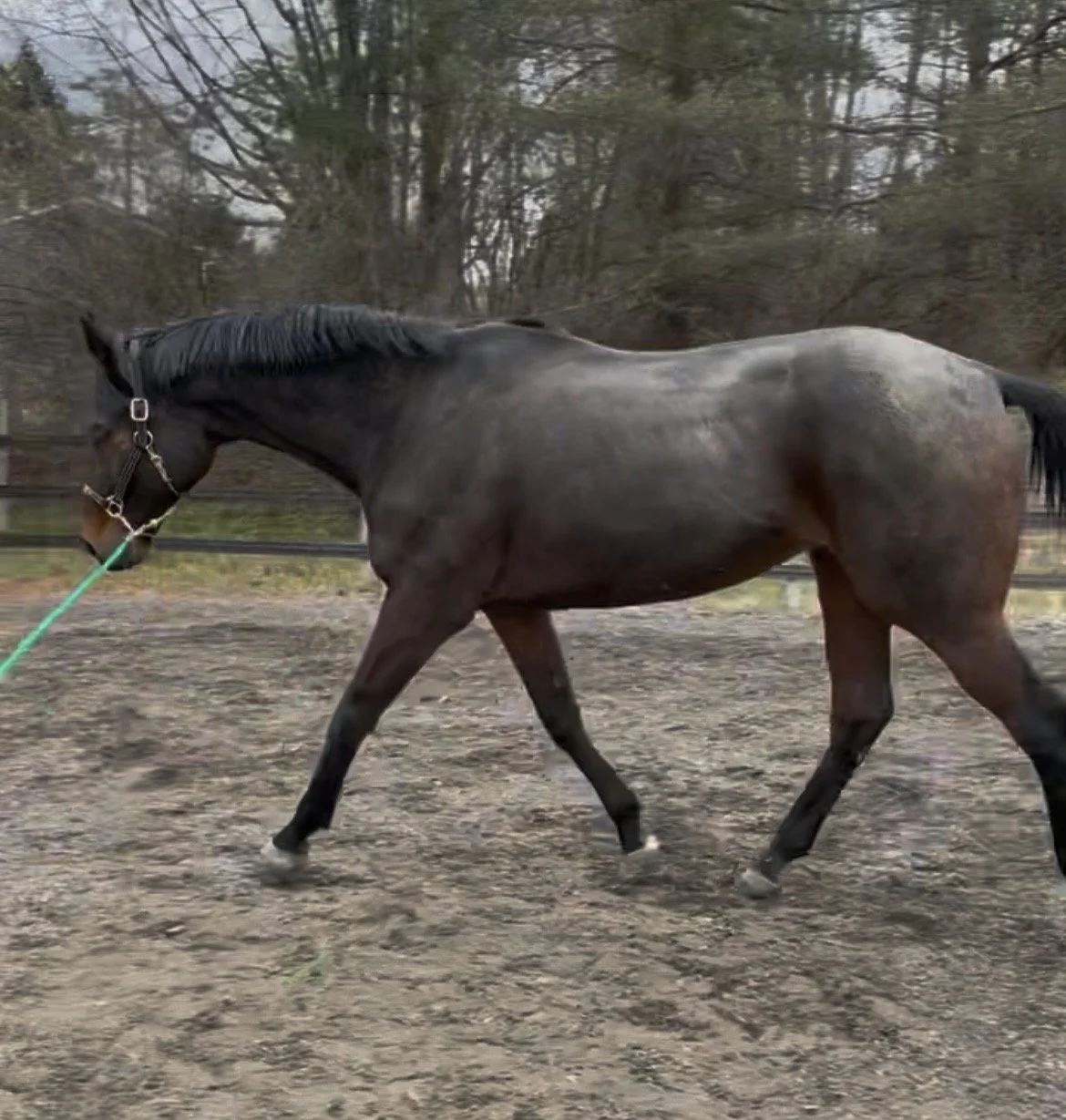
Amaretto and some ground work, learning voice commands
The Rush to the Show Ring
Scroll through social media, and you’ll see it everywhere: off-the-track Thoroughbreds (OTTBs) going from the racetrack to jumping full courses in just weeks—or even days. The professionals pulling this off are incredibly talented; they know how to ride and present a horse beautifully, making a green horse look seasoned. But here’s the question that doesn’t get asked enough: Is that horse truly ready, or is it just well-ridden in the moment? More importantly, is that horse prepared for its next rider?
Many of these horses won’t stay with those top professionals for long. They’ll move on—often quickly—to amateur homes, where the real test begins.
We’re also seeing a wave of new enthusiasts entering the Thoroughbred world, excited by what feels like a "Thoroughbred revival." These buyers are attracted to the athleticism, versatility, and heart of these horses. But that enthusiasm needs to be matched with proper support. Working with experienced trainers who understand Thoroughbreds is not just helpful; it's essential. The very sensitivity that makes these horses so special can also make them vulnerable.
In the right hands, their sensitivity becomes connection and responsiveness. Without guidance, it can easily turn into tension, confusion, and anxiety. And that’s not a flaw in the horse; it’s a gap in the process.
I Am Not a Reseller or Lister — But Let’s Talk About Them
Let me clarify: I am not a reseller or a lister. I don’t take horses in, move them quickly through a program, and sell them on a short timeline. That’s not how I operate. However, I recognize the important role resellers and listers play in the horse world. They help move horses along, create opportunities, and connect them with their next homes. Most are knowledgeable horse people who genuinely care about the horses in their program.
But here’s where I draw the line: once a horse leaves that system, that’s where true responsibility begins. That’s where the foundation should be built—not skipped. It’s where patience must take precedence over production. Too often, I see a horse that has already been rushed once being rushed again. This cycle sets both horse and rider up for failure.
The Missing Foundation
This issue extends beyond Thoroughbreds; it’s a trend seen across many disciplines. We’ve become an industry focused on the end result rather than the process. We want the finished product—now. But where is the horsemanship in that? Where is the time spent building a foundation that can support a horse through multiple riders, environments, and phases of life?
Off-the-track Thoroughbreds, in particular, deserve better. Many have been in structured training since before they turned two. Their lives have been highly managed, conditioned, and demanding—both physically and mentally. Then we pull them off the track and ask them to become something else immediately, with little pause in between.
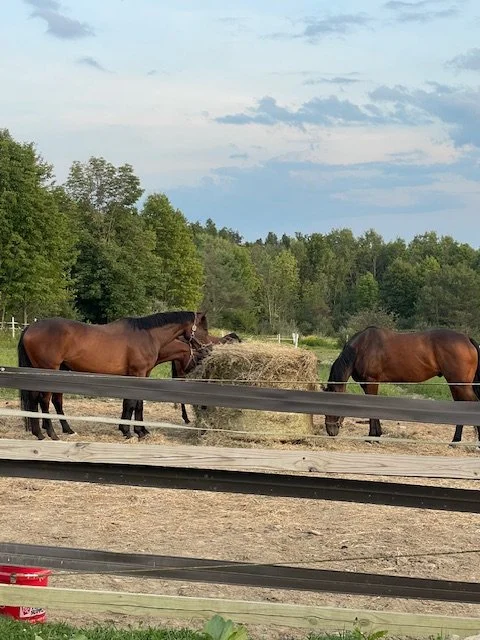
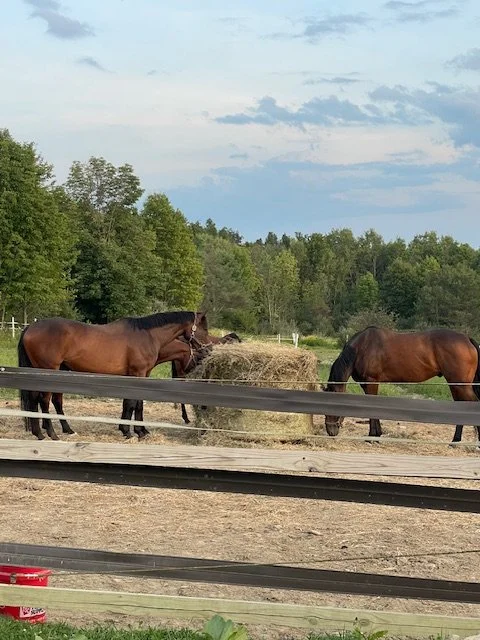
The four musketeers just hanging in the pasture.
Let Them Be Horses First
I don’t believe the best next step for an OTTB is a jump course. I believe it’s downtime. They need time to decompress, adjust, and simply be horses again. This doesn’t mean doing nothing; it means doing the right things at the right pace—groundwork, relationship-building, exposure without pressure. It’s about giving them a reset.
There’s also a very real, physical reason for this: ulcers. It’s estimated that between 80-90% of off-the-track Thoroughbreds are affected by Equine Gastric Ulcer Syndrome when they come off the track. This isn’t a failure on anyone’s part; it’s a result of the demands of racing life. Skipping the let-down period risks asking a horse to perform while uncomfortable or in pain. What may appear as behavioral issues or resistance can often be rooted in physical discomfort.
Giving them time to reset isn’t just kind; it’s necessary. A horse that has had the chance to mentally and physically reset is far more likely to succeed—not just in the next 90 days, but over the next 10 years.
The Question We Should Be Asking
Not long ago, I saw a post featuring a three-year-old OTTB already jumping 3-foot courses. The caption read: “Your next Derby horse.” Maybe it is. But here’s the question I wish had been asked instead: Is it also your next safe, reliable amateur horse? Because that’s where most of these horses are headed. If we aren’t training with that future in mind, then what exactly are we doing?
Where Do They End Up?
What happens to these horses down the line? How many go on to long, successful second careers? How many are resold again and again because the foundation was never truly there? How many end up in situations that could have been avoided with just a little more time, patience, and horsemanship?
I would love to see real data tracking horses from the racetrack through their second careers and into retirement—not just the success stories, but the full picture. Without that, we’re telling only part of the story.
A Different Approach
This year, I’m considering adopting a young horse from a rescue in Maryland—one that was pulled from the auction pipeline. If I’m fortunate enough to bring him home, my plan won’t be flashy or fast. It will be intentional. He’ll get a year to grow up, focusing on groundwork, trust, and simply learning how to be a horse again—no pressure to perform, no artificial deadlines. Just a solid foundation.
From there, I hope to apply for the 2027 Retired Racehorse Project—not just to compete, but to demonstrate what’s possible when we slow down.
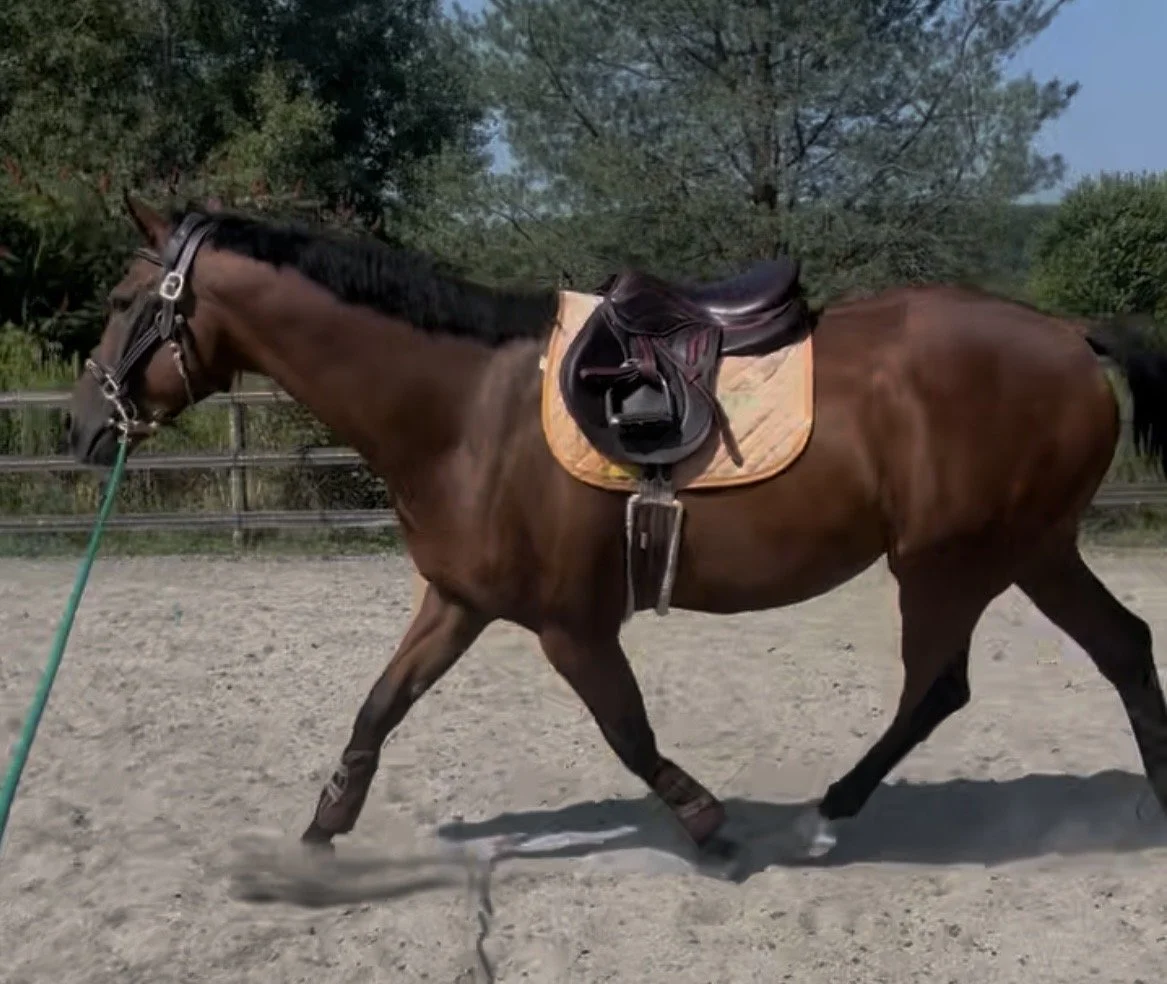
Lil Deuce Coop
Final Thoughts: This Is About Responsibility
This isn’t about criticizing individuals; it’s about challenging a system and mindset. We all say we want the best for these horses. We celebrate their athleticism, heart, and versatility. But if we truly want to honor them, we must be willing to do the less glamorous work—the slow work, the foundational work.
Retraining isn’t about how quickly a horse can perform. It’s about how well we prepare them for a lifetime beyond the track. That responsibility doesn’t belong to just one person in the pipeline; it belongs to all of us.
I’m sure some trainers will disagree with this perspective. But in a culture that increasingly rewards speed and instant results—often amplified by social media—we must ask whether we’re losing sight of the horsemanship and foundational work necessary for long-term success.
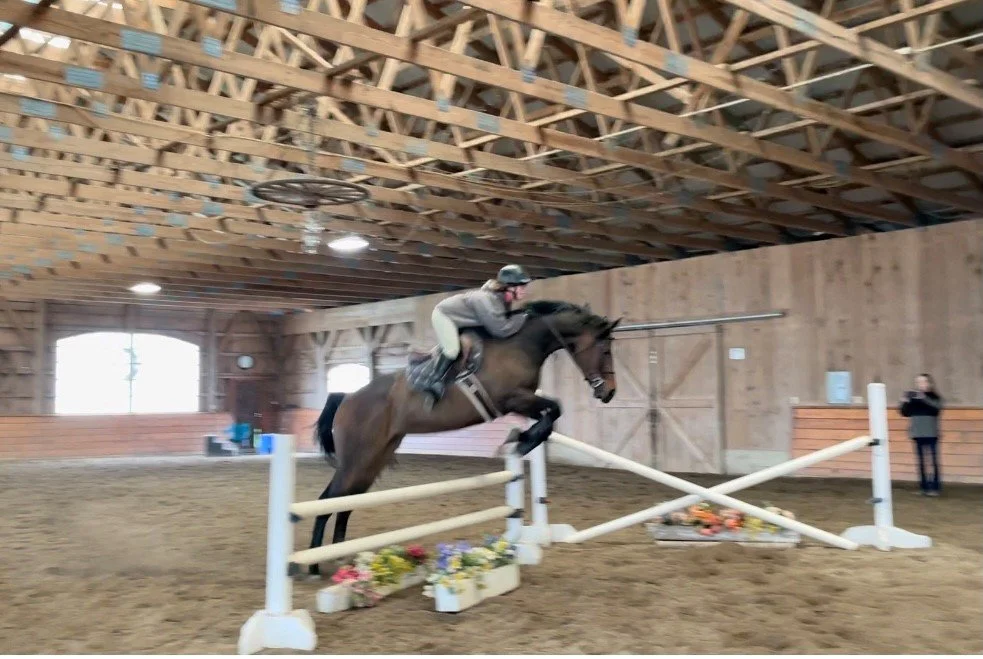
Some thoughts on purchasing OTTB’s, tire kickers, Karen’s, responsible ownership?
Responsible placement requires open communication. Resellers and aftercare organizations should be willing to answer questions and engage with potential adopters or buyers beyond the original listing. When inquiries about a Thoroughbred are met with silence or impatience, it doesn’t just frustrate me—it raises significant concerns. Thoughtful questions indicate a commitment to responsible ownership and ultimately protect the welfare of the horse.
Responsible placement requires open communication. Resellers and aftercare organizations should be willing to answer questions and engage with potential adopters or buyers beyond the original listing. When inquiries about a Thoroughbred are met with silence or impatience, it doesn’t just frustrate me—it raises significant concerns. Thoughtful questions indicate a commitment to responsible ownership and ultimately protect the welfare of the horse.
I recognize that horses—both OTTBs and purpose-bred performance horses—often change hands throughout their lives. However, OTTBs, due to the nature of the racing industry and the retraining process that follows, tend to go through more transitions. While many of these moves are positive, increased transitions can lead to less long-term stability. Each new home introduces a level of uncertainty, making responsible placement, transparency, and informed ownership critical to ensuring these horses find safe and suitable environments.
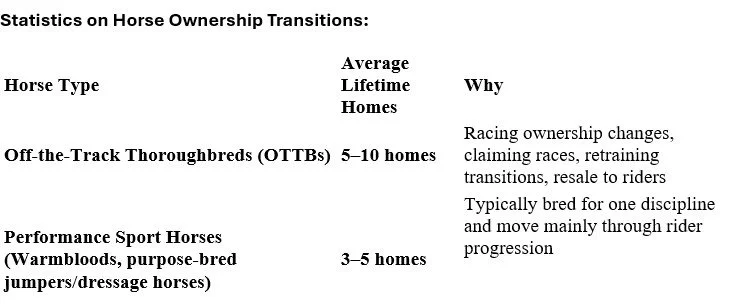
Statistics OTTB vs Performance Horses
Most Thoroughbreds will average 5–10 different owners or homes over their lifetime, which includes:
Most retired Thoroughbreds have 2–4 homes after racing.
Others, particularly those used for sport, may have 5 or more homes throughout their lives.
Approximate Breakdown (based on aftercare surveys):
~25–35% stay with their first post-track owner long-term
~40–50% change homes 2–3 times
~15–20% change homes 4+ times
While I used to aspire to be someone who trained and sold horses, I’ve realized that my perspective has shifted over the years after witnessing both wonderful outcomes and some truly heartbreaking ones. Unfortunately—or perhaps fortunately for the horses—I’ve turned out to be a bit of an epic failure in the resale industry.
The OTTBs I bring home now will stay here at Robyn’s Nest Farm. They deserve time to let down and simply be horses again before embarking on the slow, thoughtful journey of groundwork and training toward becoming finished products.
It may sound old-school, but I genuinely believe many horses today are being rushed through the process. The pressure to move them along quickly—train, sell, repeat—often leaves little room for the patience these horses truly need to transition from the racetrack to a new life.
Honestly, I could probably write an entire blog about this. The more I see, the more I feel that slowing down might be one of the best things we can do for these horses.
I have faith that most individuals working to broaden the horizons and opportunities for these incredible animals genuinely believe they’re adding value to owning a Thoroughbred—and indeed they are. But it raises an important question: why aren’t we also adding value to the process of bringing them home? The thoughtfulness of the purchase, the commitment to proper training, and long-term responsibility should matter just as much as the opportunities we hope to provide.
In conclusion, I may be one of those people some resellers or aftercare groups find annoying—the one who constantly asks questions and seeks more information. Recently, I’ve noticed that individuals like me are unfairly labeled as “Karens” or “tire kickers” for simply seeking clarity. This is not cool. Asking questions is not a problem; it’s a fundamental aspect of being a responsible horse person and safeguarding the horse’s future.
From Spotlight to Stewardship: What Thoroughbreds Really Need
I got that call—the one I’ve quietly dreaded as the buzz about Thoroughbreds has only gotten louder. You know the kind. The voice on the other end is hesitant but hopeful, looking for help after something has already gone sideways. And as someone who’s been advocating for Thoroughbreds for years, I could feel my heart sink. I knew immediately what this call was about.
Here’s the thing: as advocates, our job isn’t just to cheer for these horses from the sidelines. It’s not enough to share inspirational stories or post glamorous photos. We have a much bigger responsibility—to help guide new owners, to gently but firmly make sure people understand what it actually means to own a Thoroughbred. Because, let’s be honest, trends come and go. People get swept up in excitement, dreaming of galloping across cross country fields or winning blue ribbons, and forget that real preparation and understanding are required. The truth is, not everyone is naturally suited to own or ride a Thoroughbred, especially if the decision is more about excitement than about knowledge or readiness.
When I started BEYOND the Backstretch three years ago, it felt like I was shouting into the void. People would pat me on the back and then turn away, saying Thoroughbreds were used up, that they couldn’t compete with today’s elite warmbloods, it was lonely, honestly. Then, almost overnight, things shifted. Suddenly Thoroughbreds were everywhere. Magazines ran features on them. Big names in the industry started talking them up. There were new shows, new prizes, new organizations popping up. It was like someone flipped a switch: owning a Thoroughbred became the thing to do.
I got that call—the one I’ve quietly dreaded as the buzz about Thoroughbreds has only gotten louder. You know the kind. The voice on the other end is hesitant but hopeful, looking for help after something has already gone sideways. And as someone who’s been advocating for Thoroughbreds for years, I could feel my heart sink. I knew immediately what this call was about.
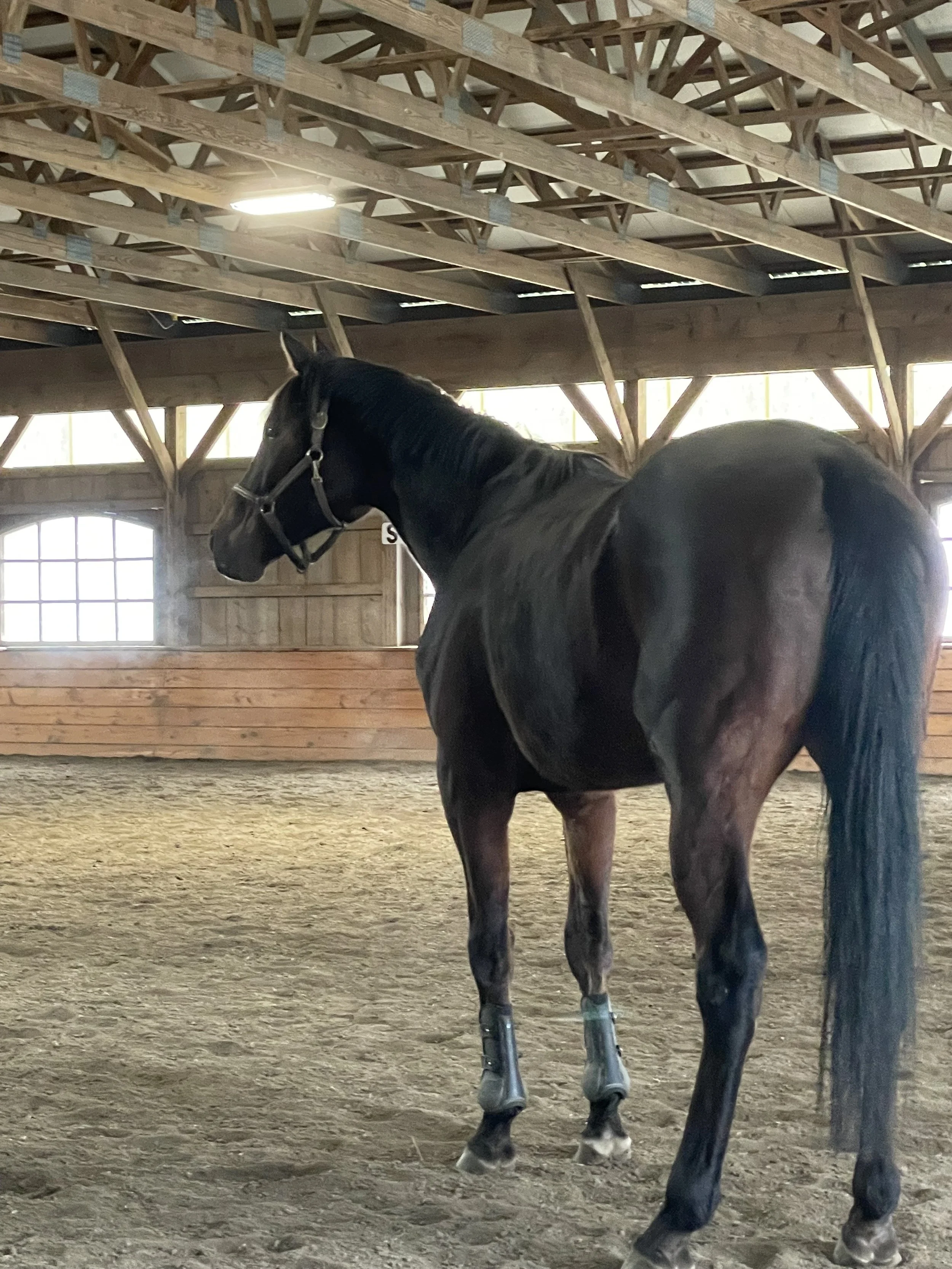
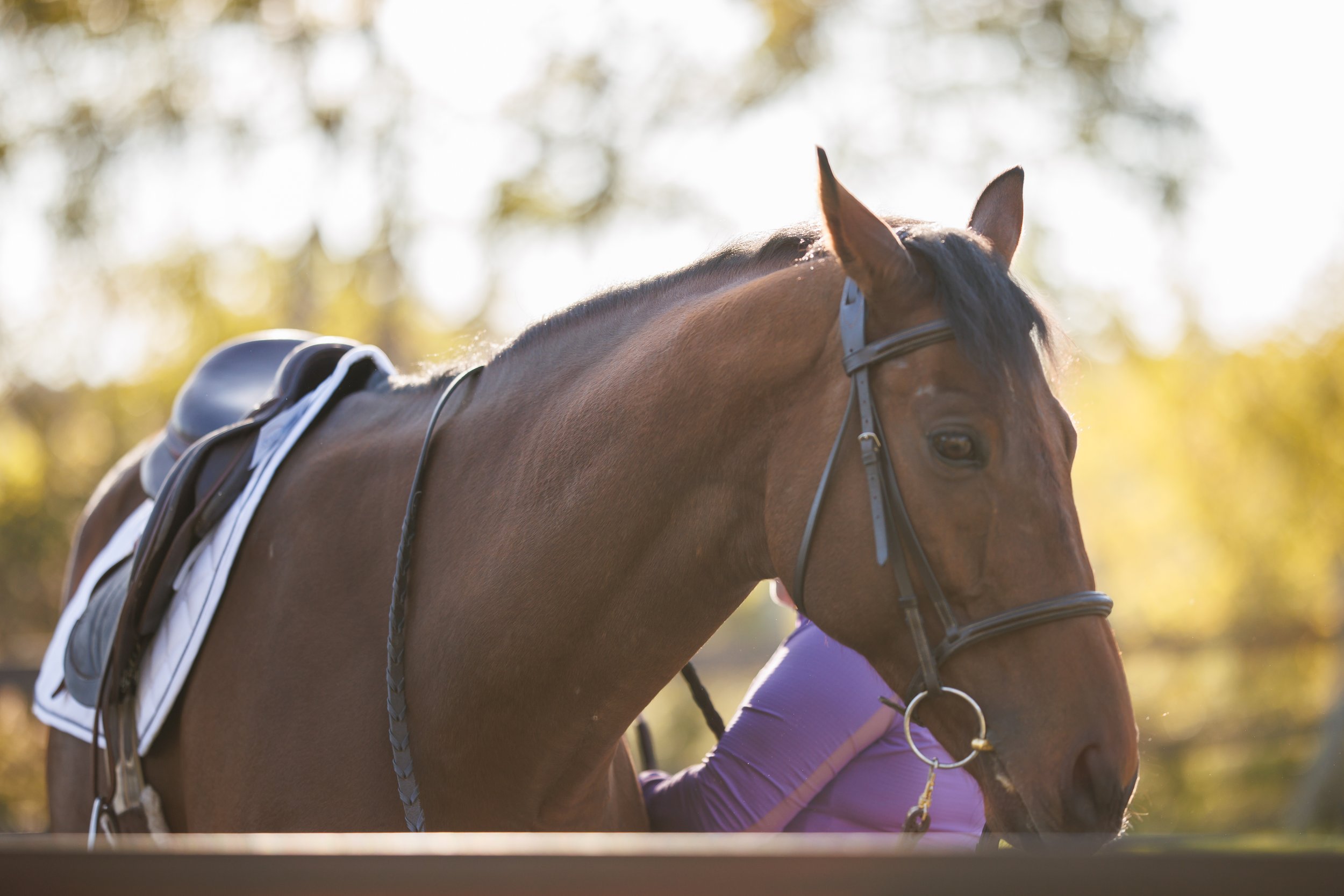
JC: Disarono standing regally - he is a ham !
Here’s the thing: as advocates, our job isn’t just to cheer for these horses from the sidelines. It’s not enough to share inspirational stories or post glamorous photos. We have a much bigger responsibility—to help guide new owners, to gently but firmly make sure people understand what it actually means to own a Thoroughbred. Because, let’s be honest, trends come and go. People get swept up in excitement, dreaming of galloping across cross country fields or winning blue ribbons, and forget that real preparation and understanding are required. The truth is, not everyone is naturally suited to own or ride a Thoroughbred, especially if the decision is more about excitement than about knowledge or readiness.
When I started BEYOND the Backstretch three years ago, it felt like I was shouting into the void. People would pat me on the back and then turn away, saying Thoroughbreds were used up, that they couldn’t compete with today’s elite warmbloods, it was lonely, honestly. Then, almost overnight, things shifted. Suddenly Thoroughbreds were everywhere. Magazines ran features on them. Big names in the industry started talking them up. There were new shows, new prizes, new organizations popping up. It was like someone flipped a switch: owning a Thoroughbred became the thing to do.
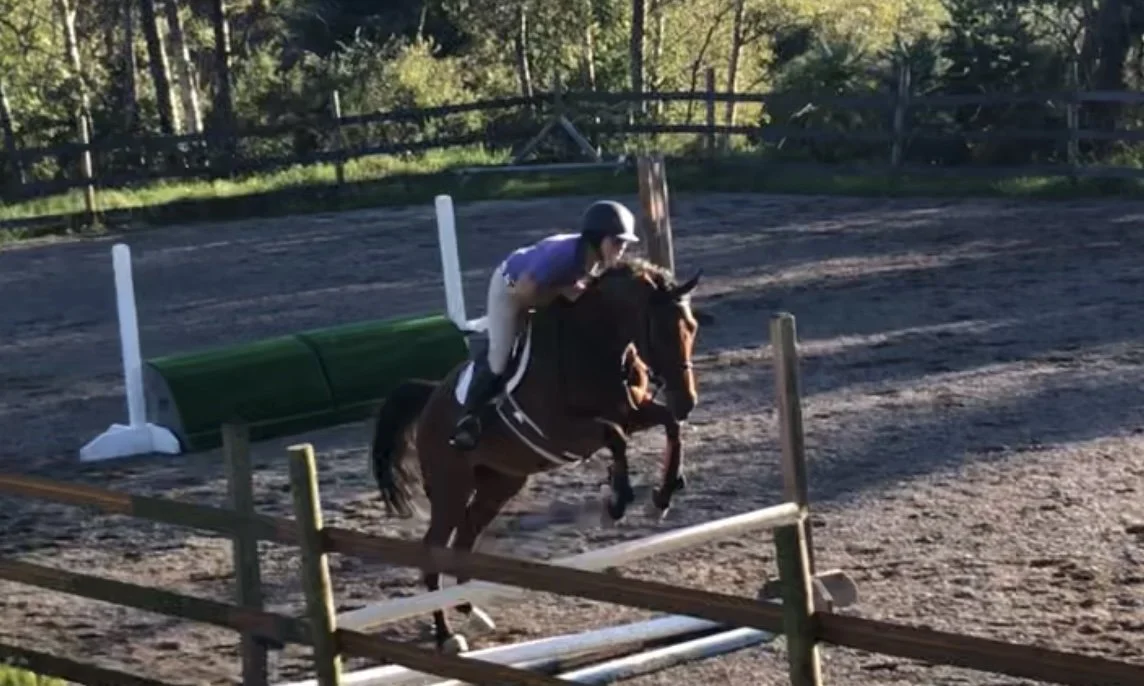
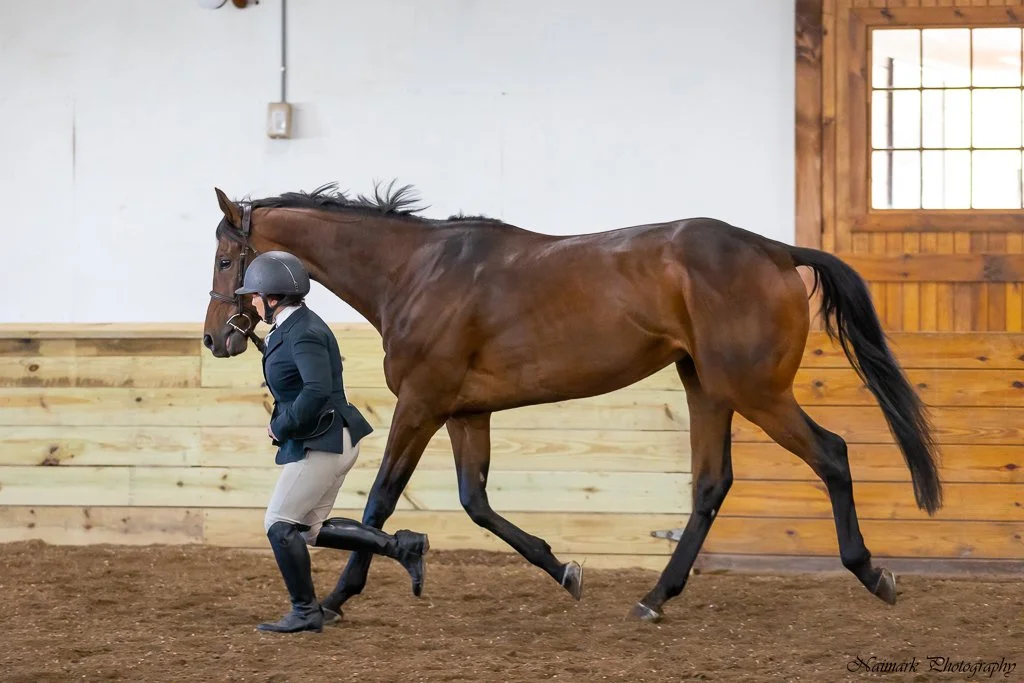
JC: Little Deuce Coup
Some days, I catch myself wondering—where were all these enthusiastic voices back when I was trying to get anyone to care? I don’t mean that in a bitter way, just...curious. But I know the answer. Thoroughbreds became a hot topic. An “it” horse. And people love to be part of something exciting.
But my relationship with Thoroughbreds has never been about what’s popular. For me, it’s a lifelong commitment. These horses have a kind of intelligence and heart that I haven’t found anywhere else. They try for us, even after giving everything they had on the track. They deserve more than just a moment in the spotlight—they deserve respect, patience, and a real chance to thrive.
With popularity, though, comes responsibility. It’s thrilling to see people appreciating the athleticism, the trainability, the sheer versatility of Thoroughbreds. But this movement needs to be grounded in real education, not just hype. The welfare of the horse always has to come first. Their longevity, their happiness—those are the things that matter most.
So, back to that phone call. Last week, a local farm owner reached out. They had a young woman who’d bought a Thoroughbred, full of dreams and enthusiasm, but without the experience or support she really needed. She’d been inspired by programs like the Retired Racehorse Project, by stories of transformation and triumph. But she didn’t have anyone guiding her, no experienced trainer to lean on, no safety net.
The outcome? It broke my heart, but I can’t say I was surprised. The horse became difficult—hard to handle, harder to ride. He wasn’t a bad horse. He was confused, overwhelmed, and didn’t know what was expected of him. The partnership hadn’t been given the foundation it needed, and so it started to crumble.
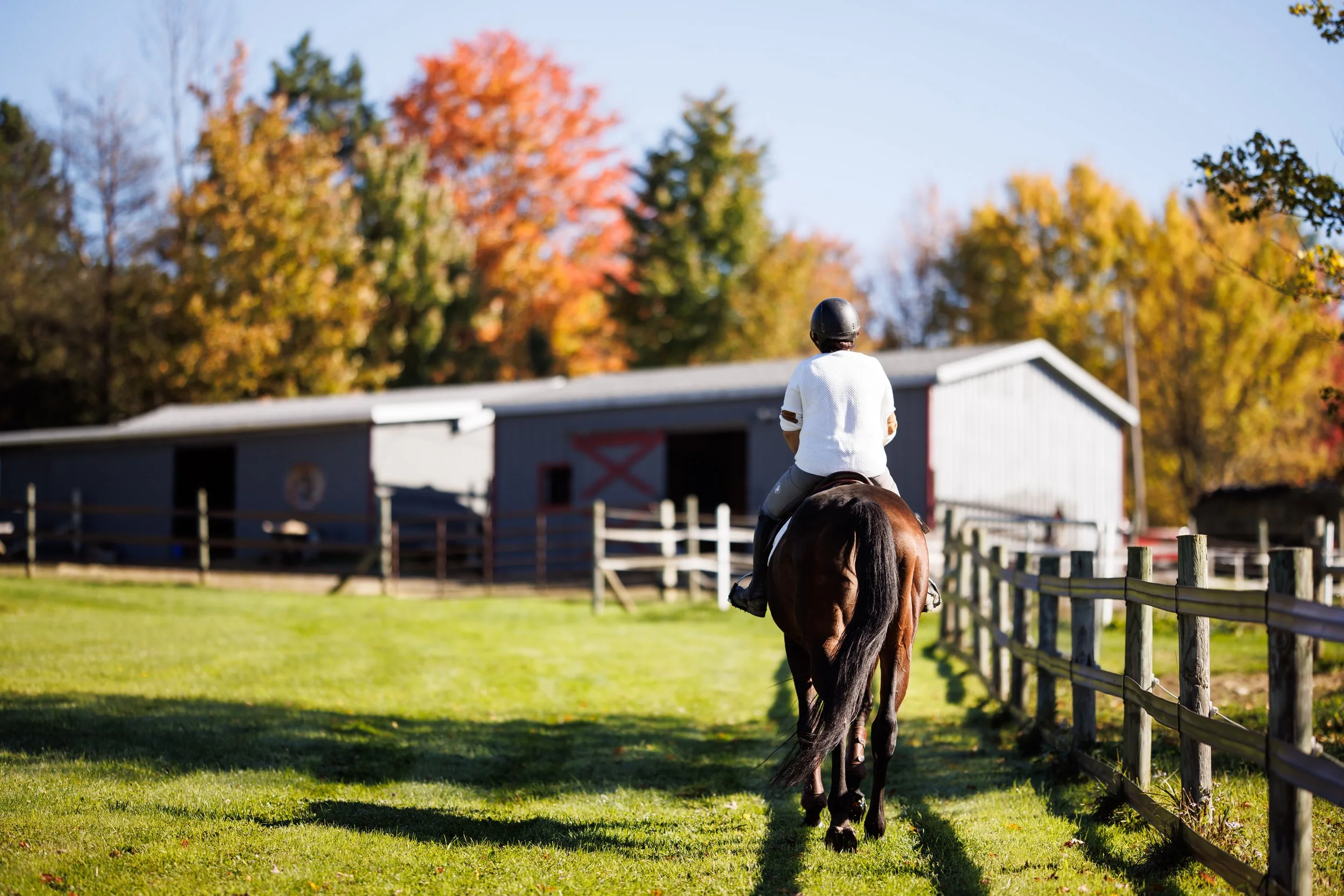
JC: Heavy Hitter walking back to the barn
This is where our responsibility as advocates really comes into play. It’s not enough to be enthusiastic. You need proper training, realistic expectations, and honest-to-goodness guidance if you want these partnerships to succeed. Otherwise, the horses pay the price.
When things go wrong, horses like this end up with a label—“dangerous.” That reputation sticks, and it follows them from owner to owner. Each time they’re passed along, the confusion and the stress build. Sometimes, the horse’s spirit—the generosity, the willingness that makes Thoroughbreds special—starts to fade away. By the time they make it to the last-chance pipeline, they’re often misunderstood and worn down, physically and emotionally.
So yes, let’s celebrate Thoroughbreds. Let’s open new doors for them in the show ring, in eventing, in dressage—everywhere. I’ll be the first to admit, I’ve pushed for this growth. I want people to see what I see: these horses are incredible. But none of that means anything if we don’t pair it with stewardship, education, and accountability. Not everyone is meant to own a Thoroughbred, and that’s okay. What matters is making sure the ones who do are truly prepared for the responsibility.
At the end of the day, promoting Thoroughbreds is the easy part. Protecting their future—that’s the real work. And I’m here for it!
Did you know?
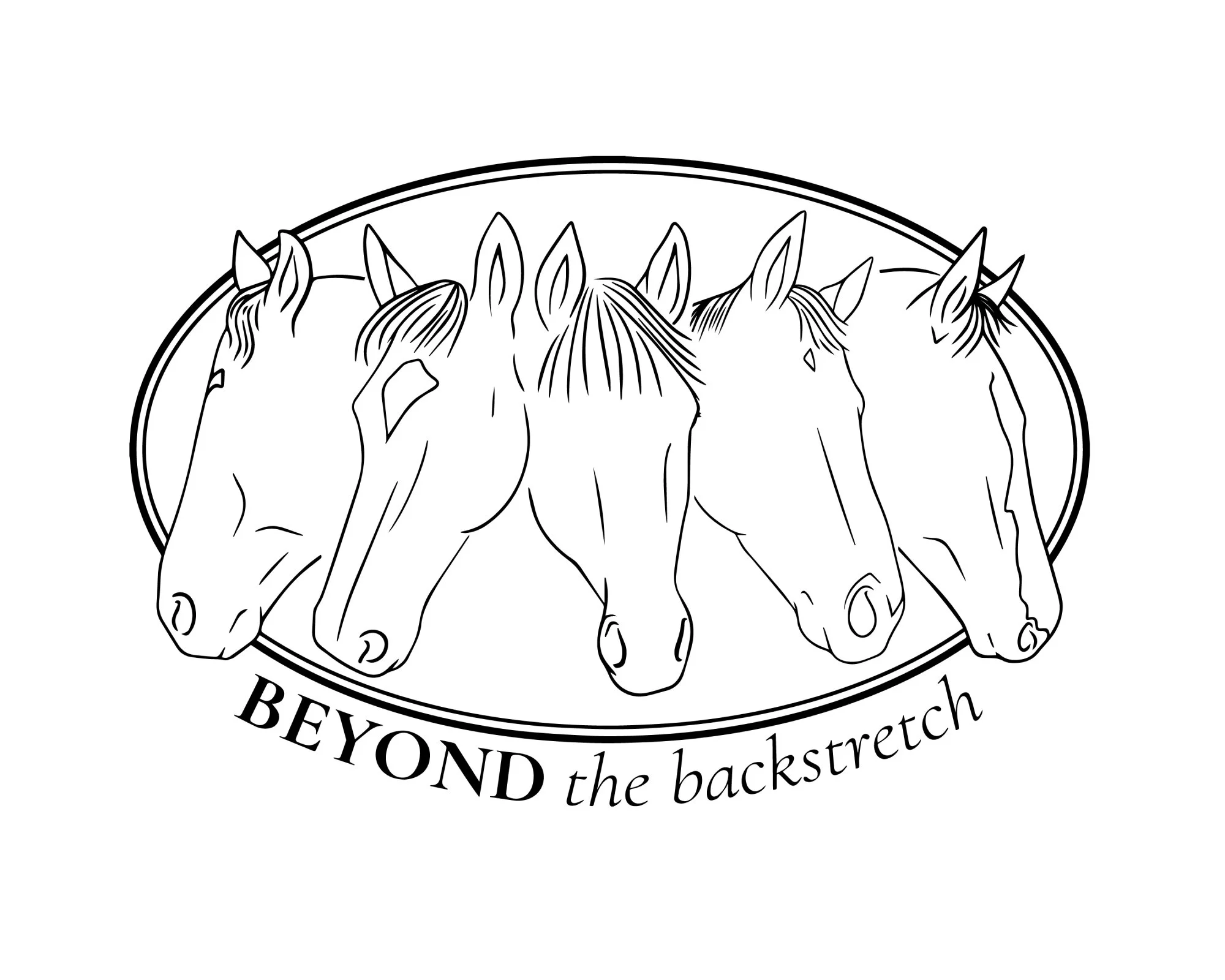
The BEYOND the Backstretch logo sprang from the stories of five thoroughbreds I own—each horse representing a chapter in my journey to give retired race horses a voice and a safe second life, along with introducing folks to the great attributes they possess and dismiss the myths that surround them.
Noon Time Blues, 2011 New York bred gelding (Noonmark – Bebop Blues by Cure the blues) was the first inspiration. In late January 2016, One of my students and I braved single-digit wind chills and drove hours in the snow to see him. He’d been on the market through Finger Lakes Finest, and though I’d passed on him for a student, I couldn’t shake the image of that young chestnut. When I arrived, he was standing in a stone barn, thin, shivering, with no hay in sight. His caretaker—a young woman bundled in a Carhartt—led us half a mile through ice-covered paths and roaring traffic to an indoor arena so I could watch him move. Despite the owner initially refusing my offer, I couldn’t walk away. After persistent negotiations, NoonTime Blues finally came home to an aftercare farm near Newark Valley. He’s the second head from the left in the logo, a reminder that every horse deserves protection.
The next year, Heavy Hitter, 2011 Kentucky Bred gelding ((Stormy Atlantic – Scene Maker by Unbridled’s Song) — “Huddy”—claimed the central spot. I met him on the backside and knew immediately he was my heart horse. Trainers had cared for him beautifully, and within weeks he was at Robyn’s Nest Farm. Though I planned to send him to Retired Racehorse Project Makeover (RRP) in 2017, a hip replacement delayed those plans. Still, Huddy remains an amazing partner and our logo’s focal point.
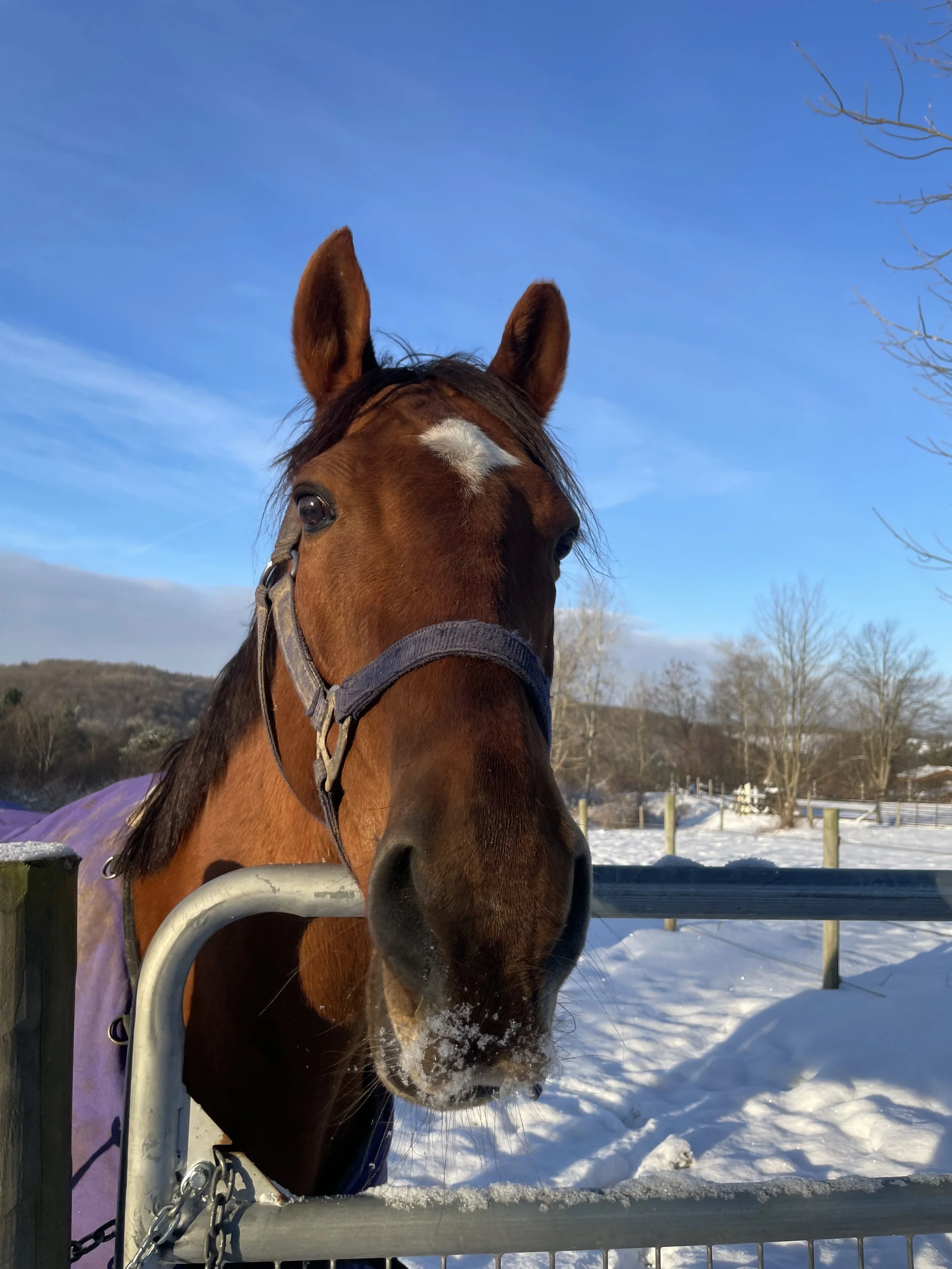
Noon Time Blues - Noonie
The BEYOND the Backstretch logo sprang from the stories of five thoroughbreds I own—each horse representing a chapter in my journey to give retired race horses a voice and a safe second life, along with introducing folks to the great attributes they possess and dismiss the myths that surround them.
Noon Time Blues, 2011 New York bred gelding (Noonmark – Bebop Blues by Cure the blues) was the first inspiration. In late January 2016, One of my students and I braved single-digit wind chills and drove hours in the snow to see him. He’d been on the market through Finger Lakes Finest, and though I’d passed on him for a student, I couldn’t shake the image of that young chestnut. When I arrived, he was standing in a stone barn, thin, shivering, with no hay in sight. His caretaker—a young woman bundled in a Carhartt—led us half a mile through ice-covered paths and roaring traffic to an indoor arena so I could watch him move. Despite the owner initially refusing my offer, I couldn’t walk away. After persistent negotiations, NoonTime Blues finally came home to an aftercare farm near Newark Valley. He’s the second head from the left in the logo, a reminder that every horse deserves protection.
The next year, Heavy Hitter, 2011 Kentucky Bred gelding ((Stormy Atlantic – Scene Maker by Unbridled’s Song) — “Huddy”—claimed the central spot. I met him on the backside and knew immediately he was my heart horse. Trainers had cared for him beautifully, and within weeks he was at Robyn’s Nest Farm. Though I planned to send him to Retired Racehorse Project Makeover (RRP) in 2017, a hip replacement delayed those plans. Still, Huddy remains an amazing partner and our logo’s focal point.
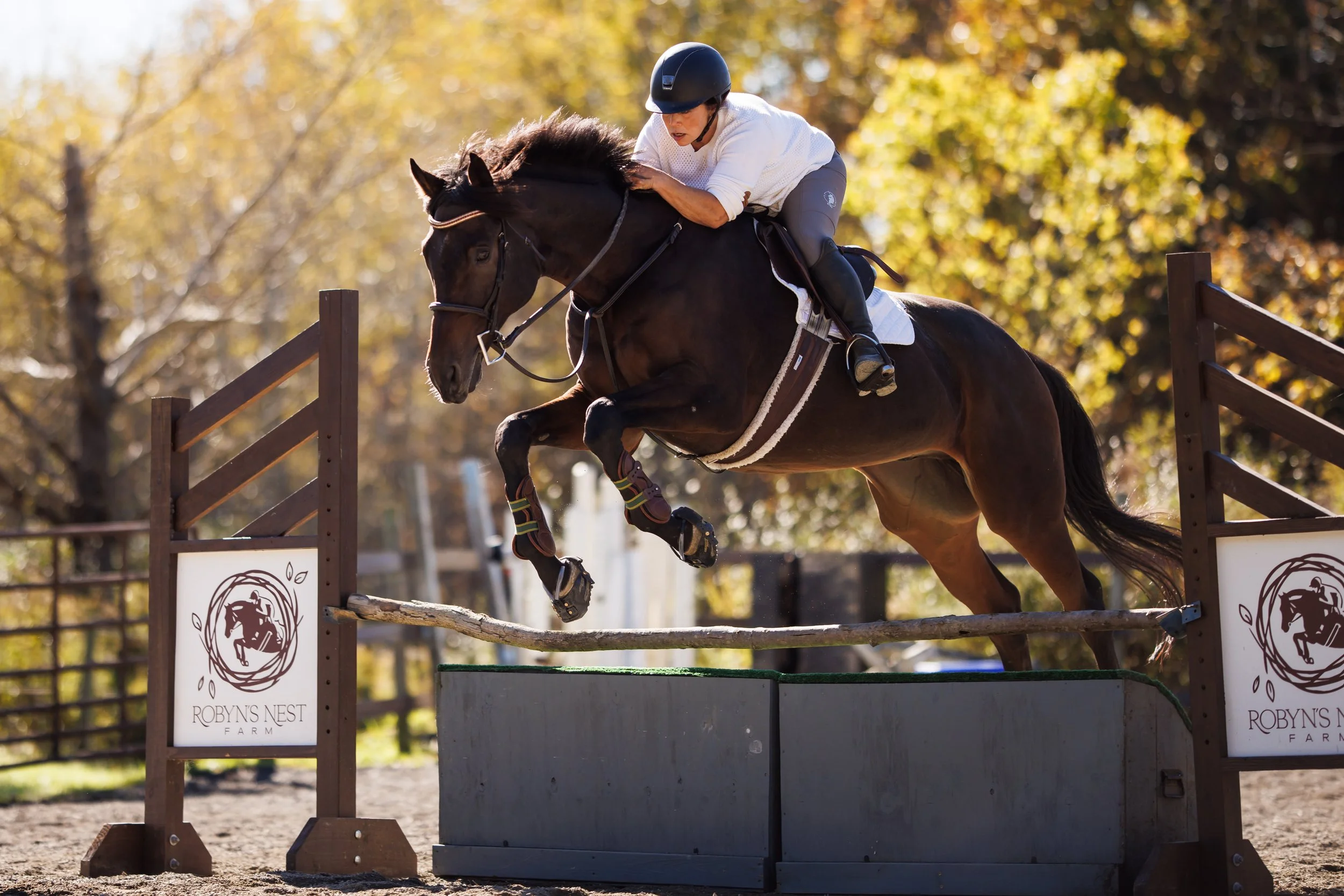
Heavy Hitter - Huddy (after the late handsome Rock Hudson)
In 2021 I bought Lil Deuce Coupe, 2015 Kentucky bred gelding (Curlin – Judith Basin by Danzig) originally acquired by an aftercare group with the intent he would attend RRP. Though he never made it to RRP, he’s developed into a successful hunter and a true treasure on my farm. He’s the second figure from the right, facing forward with quiet confidence.
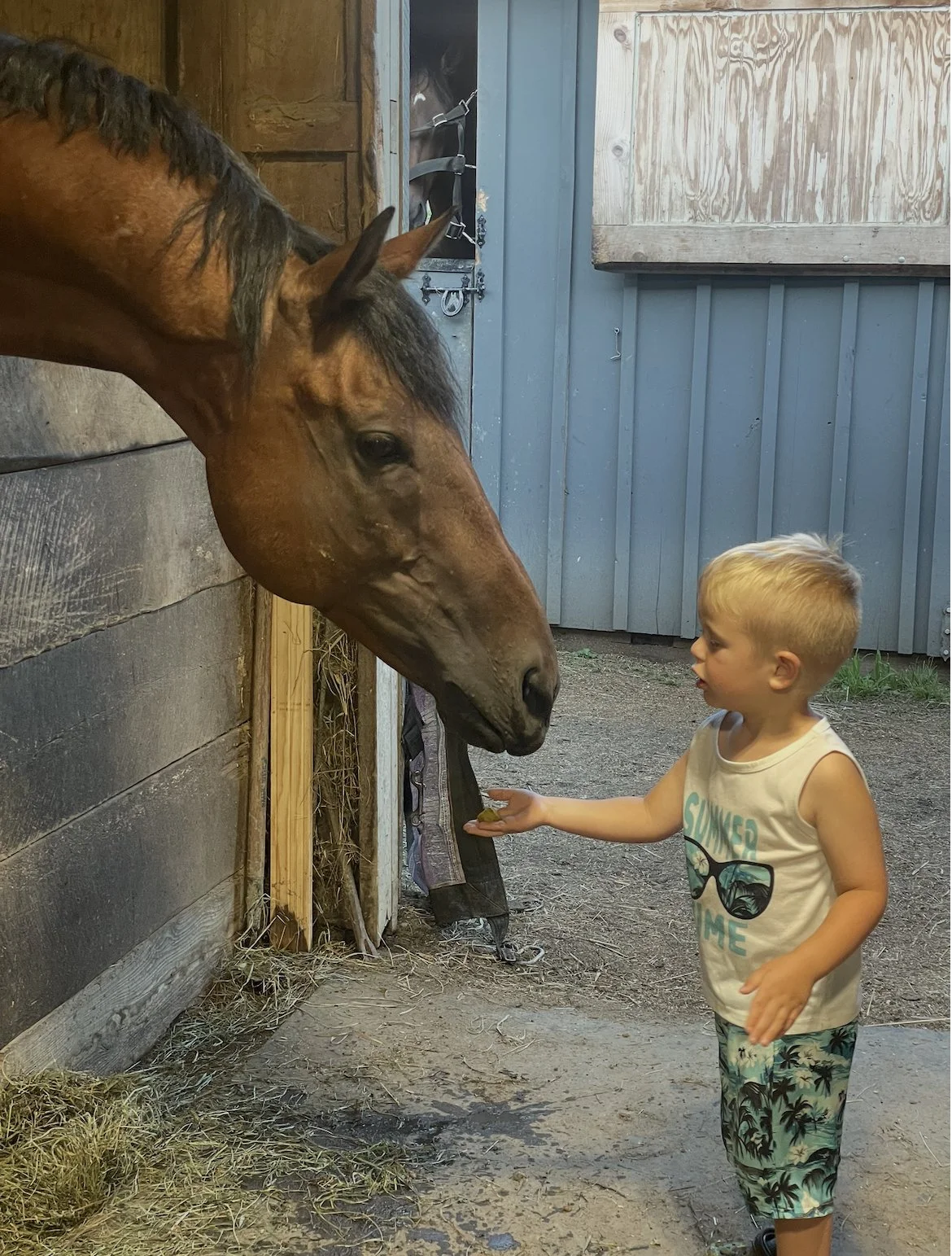
Lil Deuce Coupe - Deuce (and my adorable grandson)
That same year we welcomed Disarono, 2018 Kentucky bred gelding (Dialed In - Cosmic Energy by Unbridled Energy) —nicknamed Amaretto—a playful 2018 big bay rehabbing at Saratoga Glen Farm. What a beautiful place, and what gracious hosts. Amaretto came home in 2021 and, watch for him in 2026’s show ring. He’s the far-right horse in the logo, curious and full of promise.
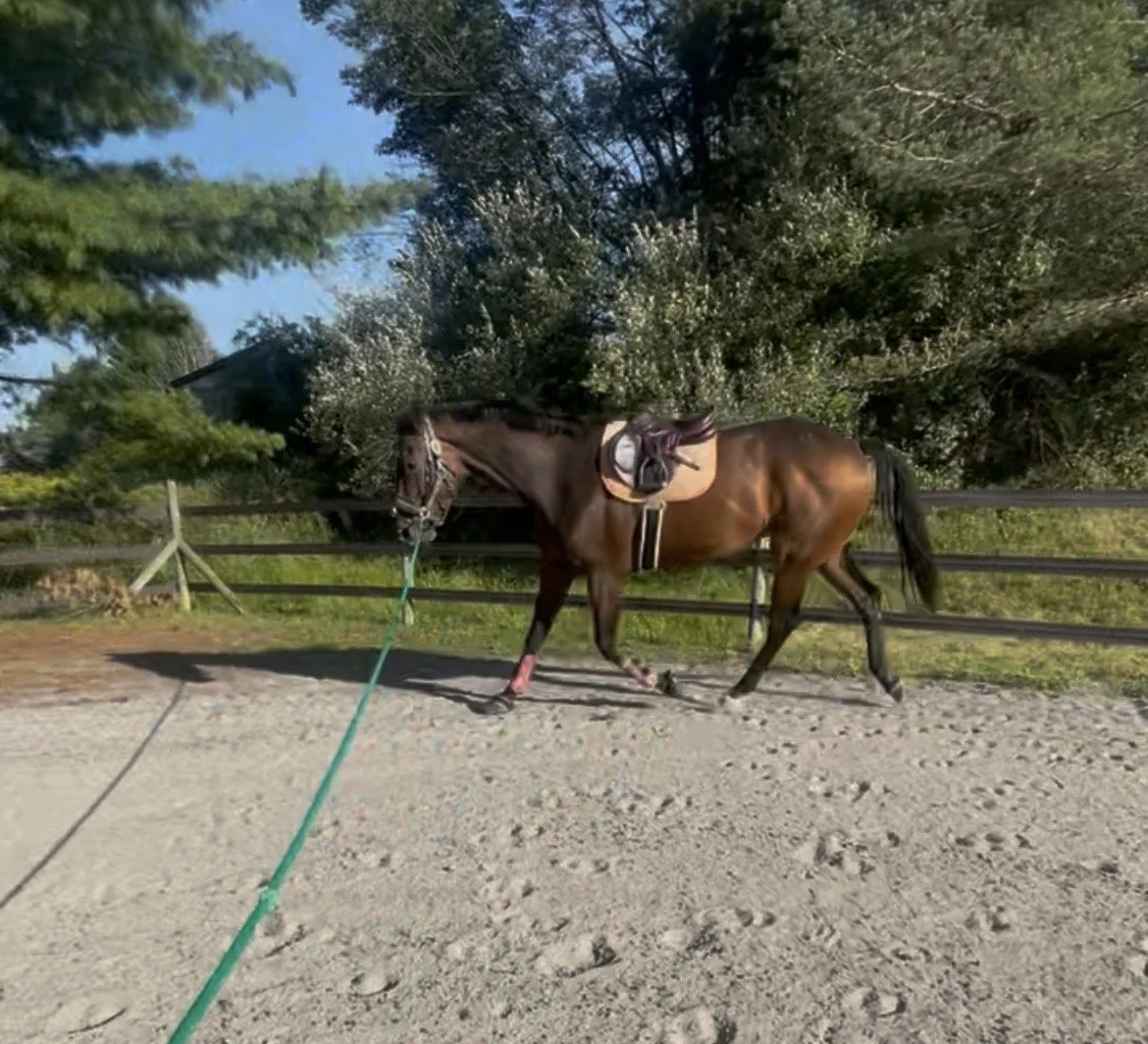
Disarono - Amaretto
Finally, My Classic Remarque, 2021 Virginia Bred mare (Remarquez – Classy Bows By Oxbow) —“Harmony”—joined us from Colordale Farm in Virginia. Purchased as a weanling, she arrived at Robyn’s Nest in December 2021. A stunning mover and perfect example of the Colored Thoroughbred, not to mention the most affectionate horse in the barn, she’s positioned on the far right.
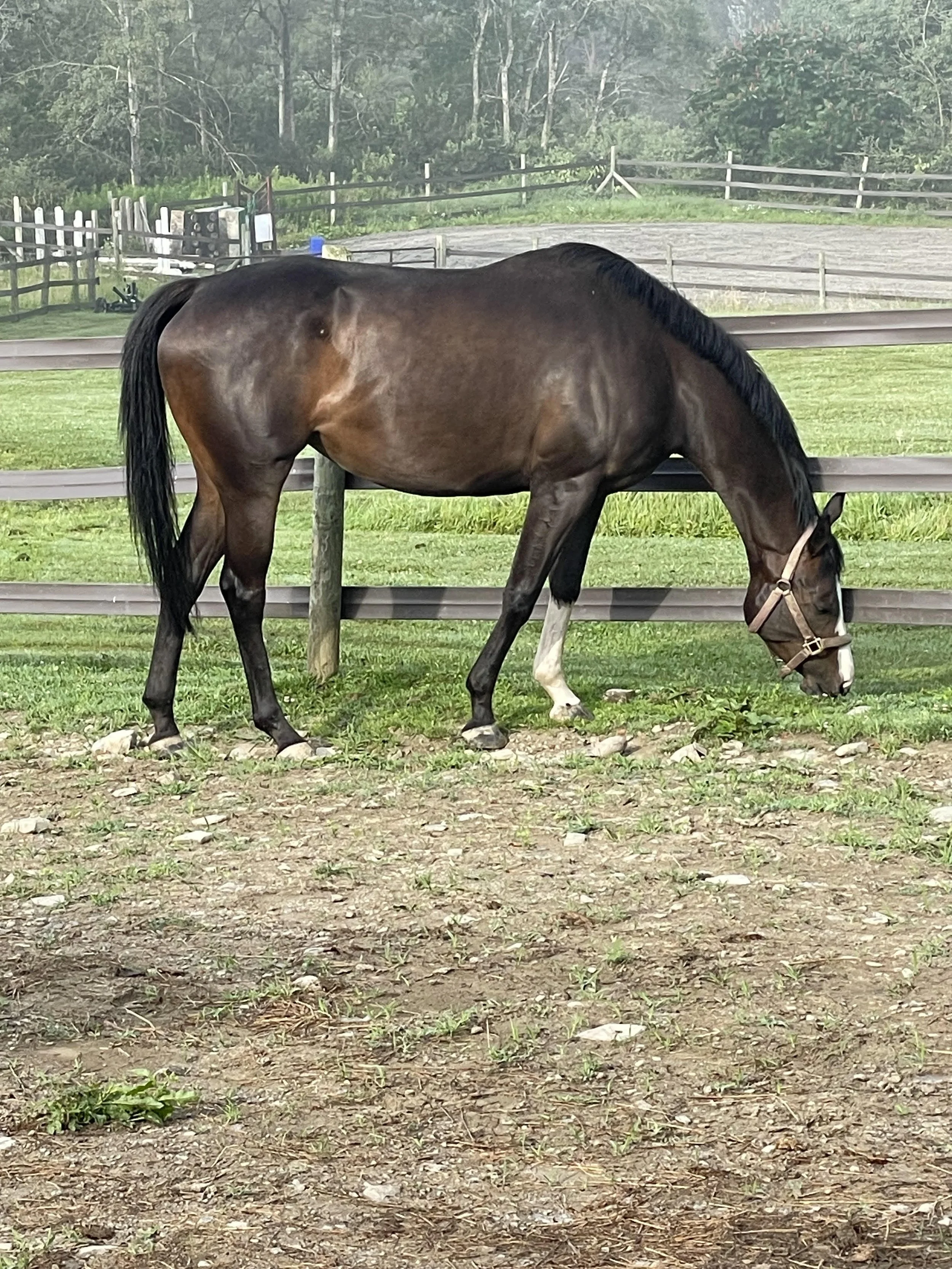
Classic Remarque - Harmony
Through BEYOND the Backstretch, my goal to champion thoroughbreds at every stage—celebrating those who flourish in new careers and supporting those who need a soft landing beyond racing, and those stuck in the auction pipeline.
Some TBs face uncertain futures after their racing careers end, with some ending up in neglectful situations or at risk of being sent to auction where their fate can be dire. By advocating for these horses, we not only provide them with a safe haven but also raise awareness about the need for responsible ownership and aftercare.
Each horse has a unique story and potential that deserves recognition and respect. By supporting organizations like BEYOND the Backstretch, we can ensure that these remarkable athletes transition successfully into new roles, whether that be in equestrian sports, therapy programs, or as beloved companions. This shift not only improves their quality of life but also fosters a culture of compassion and responsibility within the equine community.
Moreover, helping TBs reinforces the message that every horse — deserves a chance to thrive. When we invest in their futures, we create a ripple effect that encourages more people to adopt, support, and advocate for retired race horses. Together, we're not only changing the lives of these horses but also inspiring others to recognize and celebrate their unique value.
In essence, our commitment to helping thoroughbreds is a testament to our dedication to animal welfare and a brighter future for all equines.
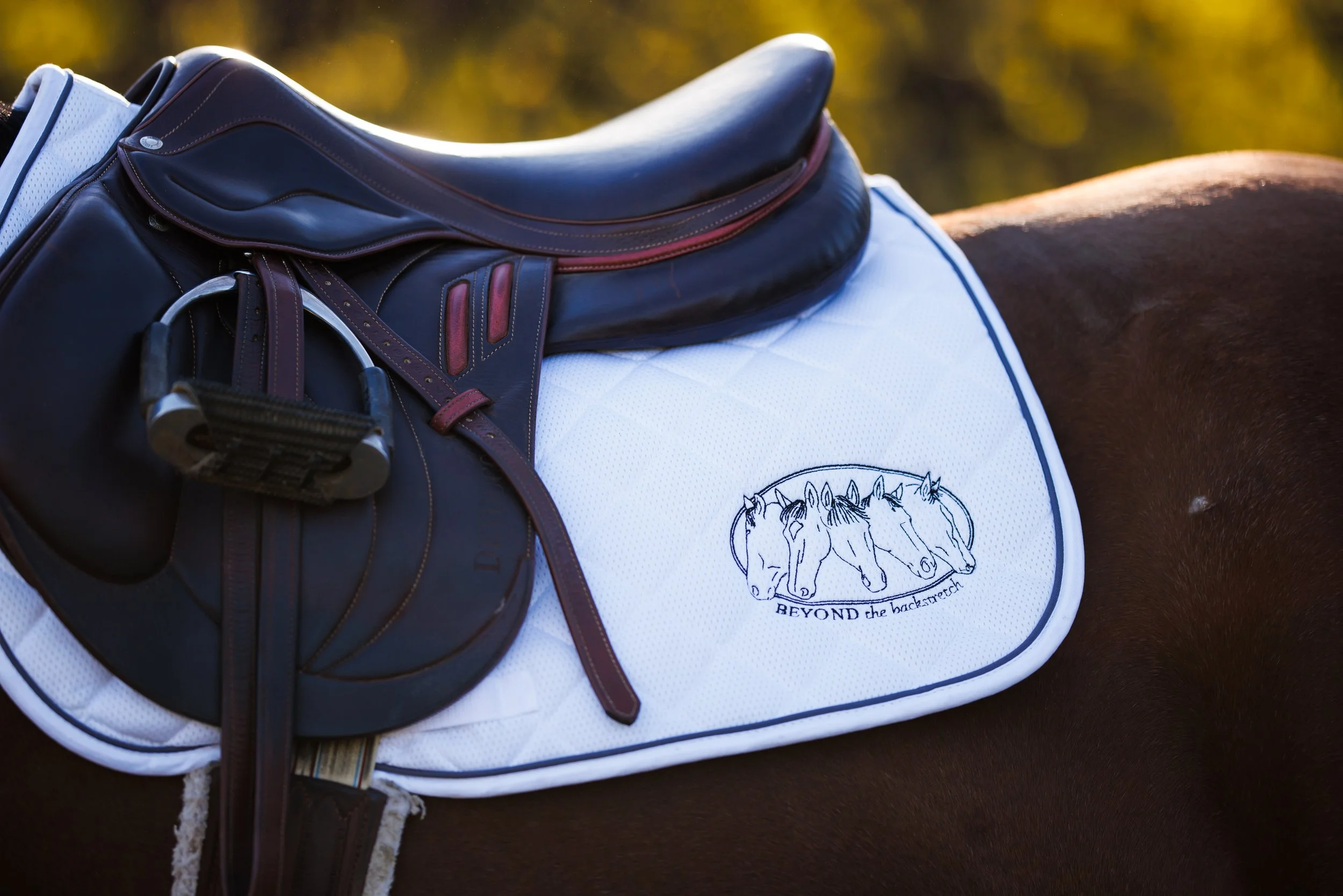
BEYOND the Backstretch: Where Participation Becomes Purpose
Hey there, horse lovers! Welcome to BEYOND the Backstretch, where our passion for Thoroughbreds runs deep! We believe that just admiring these magnificent horses isn't enough—they deserve exciting second chances, and the incredible organizations that care for them need our support. And guess what? That belief is the wind in our sails!
Hey there, horse lovers! Welcome to BEYOND the Backstretch, where our passion for Thoroughbreds runs deep! We believe that just admiring these magnificent horses isn't enough—they deserve exciting second chances, and the incredible organizations that care for them need our support. And guess what? That belief is the wind in our sails!
At BEYOND the Backstretch, we’re dedicated to championing Thoroughbred aftercare while giving these beauties a spotlight beyond the racetrack. Through thrilling horse shows, partnered divisions at various equestrian events, and year-round fun-filled educational and fundraising initiatives, we create fantastic opportunities that benefit our retired Thoroughbreds and the programs that love them.
How We Create Funds
So, what makes us different from your typical fundraising gig? Well, instead of just asking for donations, we’ve flipped the script and turned participation into the ultimate fundraiser!
Here’s the scoop:
First, our generous sponsors step in to cover the foundational costs of hosting a fantastic event—think venue expenses, jumps, prizes, ribbons, and staffing. This means we can offer a professional, welcoming horse show experience for riders of all levels. Once we’ve got those basics covered, every rider entry, division fee, and class participation starts cranking out extra funds. And guess where those funds go? Straight to Thoroughbred aftercare! So, a single sponsorship doesn’t just sit there being boring—it multiplies through all the fun!
For example, a $100 class sponsorship helps buy ribbons and prizes. If ten riders enter that class at $25 each, that class alone brings in $250—meaning that initial $100 sponsorship helped grow an extra $150 for aftercare. And this model scales up with division and day sponsors, creating a ripple effect of awesome impact!
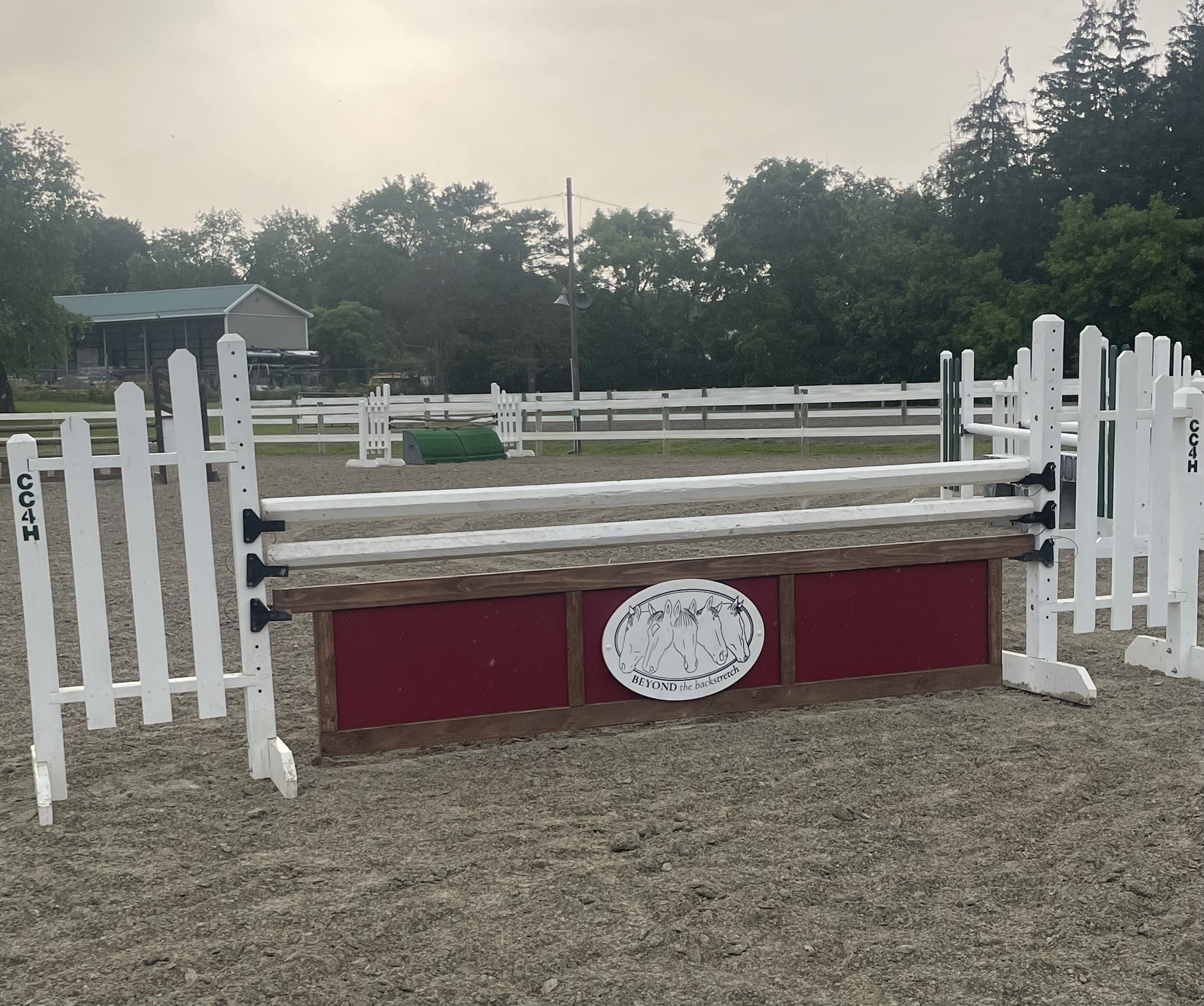
June 14, 2025 BEYOND the backstretch Horse show
Our Flagship Horse Show
Drumroll, please! Our flagship event—the Beyond the Backstretch Horse Show! This all-breed competition is all about showcasing Thoroughbreds in their second careers. We welcome all horses and riders with open arms, but we put the spotlight on our fabulous Thoroughbreds—showcasing their versatility, athleticism, and heart like never before!
We’ve crafted the show with our amazing patrons in mind: think fantastic prizes, great classes, and an atmosphere bursting with camaraderie, horsemanship, and shared purpose. Riders don’t just attend; they become part of a spirited mission!
Circle June 13, 2026, on your calendars—our next Beyond the Backstretch Horse Show is where the magic happens!
Supporting Aftercare—With Transparency
Each year—or on a two-year cycle—we pick two Thoroughbred aftercare organizations to support. But we don’t stop at just fundraising; we go above and beyond! Throughout the year, we shine a light on our chosen aftercare programs with interviews, social media features, behind-the-scenes peeks, and stories that show exactly what they do, how they do it, and how donations make a real difference.
Transparency is a big deal for us. We want our supporters to see the impact of their involvement—not just in numbers, but in stories of lives changed!
Why It Matters
BEYOND the Backstretch is all about bridging the gap between admiration and action! One sponsorship blossoms into many donations. One horse show creates buzz year-round. And every retired Thoroughbred supported gets a fabulous start to their next chapter.
Whether you join us as a rider, sponsor, volunteer, or supporter, you’re helping create a vibrant community where second chances are not just possible—they're celebrated!
Join us on June 13, 2026, to be part of something truly special!
To learn more, get involved, or join us on June 13, 2026, visit beyondthebackstretch.com.